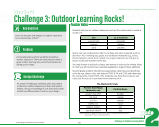
Challenge 3: Outdoor Learning Rocks! 136
2 2
grade grade
STEMulating Design Challenges in Science, Grades K–2
Vocabulary
Materials
For the teacher
For each team
boulder cobble
pebble rain gauge
rock sand
thermometer wind vane
• safety gloves (optional)• glue gun and glue sticks
Before attempting this challenge, students should know
or be able to
• “describe, and compare rocks by size, texture, and color” (TEKS 2.7A);
• “identify the importance of weather and seasonal information to make choices in clothing, activities, and transportation” (TEKS 2.8B);
• identify and describe how “weather instruments such as thermometers, wind vanes, and rain gauges” are used (TEKS 2.4A); and
• “make predictions based on observable patterns” (TEKS 2.3B).
It may be helpful to gather pictures or videos of outdoor
classrooms from the Internet to help inform students
about these learning spaces. Through their research,
students will find that outdoor classrooms may vary
in size and content. They may find plans for outdoor
classrooms, but encourage students to incorporate
their own ideas into their models.
Landscape architects design outdoor spaces to meet
the needs and wants of their clients. They include paths,
walkways, flowers, leafy plants, shrubs, and trees in their
plans. They also include seating, work spaces, art, or
water features the client may desire. Architects consider
the budget, the shape and size of the outdoor spaces,
the type of plants to include (such as native plants,
plants that prefer shaded or sunny areas, or plants that
need more or less water), who will use the space, and
the purpose for which the space will be used.
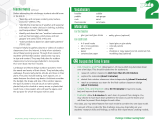
Suggested Time Frame
• Ask, Imagine, and Plan: Allow teams 1–1.5 hours which may be broken down over a few days. This should include time for students to
research outdoor classrooms (not more than 45–60 minutes)
explore the materials (about 5 minutes)
sketch their outdoor classroom ideas independently (about 15 minutes)
reach a consensus as a team for the final outdoor classroom design
(about 15 minutes)
• Create, Test, and Improve: Allow
60–90 minutes for teams to create,
test, and improve their designs.
• Evaluate: Allow 3–5 minutes for each team to present their designs. You
may choose to have each team present to the class or pair the teams and
ask them to present their designs to each other.
As a class, you may select features from each model to combine into one class model.
The amount of time needed for this challenge may vary depending on your
students’ research skills and findings, as well as their experiences creating models.
• liquid glue or glue sticks
• colored pencils
• ruler
• shoebox or copy paper box lid, aluminum foil, modeling clay (optional)
• 4–6 small rocks
• 20 or more pebbles
• sand or soil
• paper
• construction paper
Teacher Notes continued
2 2
grade grade
STEMulating Design Challenges in Science, Grades K–2
Vocabulary
Materials
For the teacher
For each team
boulder cobble
pebble rain gauge
rock sand
thermometer wind vane
• safety gloves (optional)• glue gun and glue sticks
Before attempting this challenge, students should know
or be able to
• “describe, and compare rocks by size, texture, and color” (TEKS 2.7A);
• “identify the importance of weather and seasonal information to make choices in clothing, activities, and transportation” (TEKS 2.8B);
• identify and describe how “weather instruments such as thermometers, wind vanes, and rain gauges” are used (TEKS 2.4A); and
• “make predictions based on observable patterns” (TEKS 2.3B).
It may be helpful to gather pictures or videos of outdoor
classrooms from the Internet to help inform students
about these learning spaces. Through their research,
students will find that outdoor classrooms may vary
in size and content. They may find plans for outdoor
classrooms, but encourage students to incorporate
their own ideas into their models.
Landscape architects design outdoor spaces to meet
the needs and wants of their clients. They include paths,
walkways, flowers, leafy plants, shrubs, and trees in their
plans. They also include seating, work spaces, art, or
water features the client may desire. Architects consider
the budget, the shape and size of the outdoor spaces,
the type of plants to include (such as native plants,
plants that prefer shaded or sunny areas, or plants that
need more or less water), who will use the space, and
the purpose for which the space will be used.
Suggested Time Frame
• Ask, Imagine, and Plan: Allow teams 1–1.5 hours which may be broken down over a few days. This should include time for students to
research outdoor classrooms (not more than 45–60 minutes)
explore the materials (about 5 minutes)
sketch their outdoor classroom ideas independently (about 15 minutes)
reach a consensus as a team for the final outdoor classroom design
(about 15 minutes)
• Create, Test, and Improve: Allow
60–90 minutes for teams to create,
test, and improve their designs.
• Evaluate: Allow 3–5 minutes for each team to present their designs. You
may choose to have each team present to the class or pair the teams and
ask them to present their designs to each other.
As a class, you may select features from each model to combine into one class model.
The amount of time needed for this challenge may vary depending on your
students’ research skills and findings, as well as their experiences creating models.
• liquid glue or glue sticks
• colored pencils
• ruler
• shoebox or copy paper box lid, aluminum foil, modeling clay (optional)
• 4–6 small rocks
• 20 or more pebbles
• sand or soil
• paper
• construction paper
Teacher Notes continued