Challenge 1: Bring Home the Bacon112STEMulating Design Challenges in Science, Grades K–2
2 2
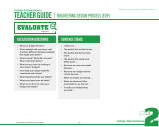
TEACHER GUIDE
Challenge 1: Bring Home the Bacon
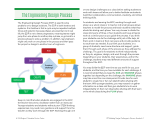
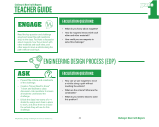
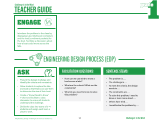
ENGINEERING DESIGN PROCESS (EDP)
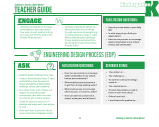
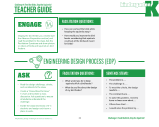
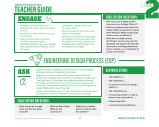
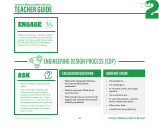
ENGAGE ENGAGE
ENGAGE
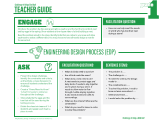
• Distribute a design challenge card to each team or read the design challenge, criteria, and constraints to the class.
• Display the river and truck that will be used during the Evaluate portion of the challenge. Ask one student to measure the width of the “river” and report it to the class. Ask a different student to measure the length and width of the “truck” and report those measurements to the class. Teams should record this information in their Engineering Design Notebooks for use as they plan.
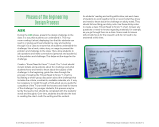
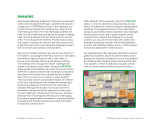
• Create a “Know/Need to Know” T-chart and facilitate a class discussion.
Ask questions to ensure all students understand the challenge.
ASK
• Divide the class into teams of 3–4 students and assign each team a place to work.
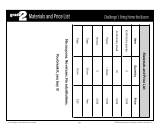
• Distribute six index cards and six cups to each team.
• Instruct student teams to use the provided materials to build a freestanding bridge. The longest bridge built using the fewest materials will be the winner.
• Give teams 1 minute to plan and 3 minutes to build.
• Allow each
team to share about and measure their bridge.
• Introduce the problem by discussing the bridges the teams just built, what the students know ab
out bridges, the materials used to build bridges, and the ways we use bridges.
FACILITATION QUESTIONS:
• How were your bridges similar? How were your bridges different?
• Did some bridges work better than others? What construction choices were effective? What construction choices were not effective?
• What does a bridge need to do? Bridges need to span specific distances and support the load that will cross it, including pedestrians, trains, vehicles, or a combination of people and vehicles.
SENTENCE STEMS:
• The problem is . . .
• The challenge is . . .
• To meet the criteria, the design needs to . . .
• The constraints are . . .
• To solve this problem, I need to know or learn more about . . .
• Others have tried . . .
• I would solve the problem by . . .
grade grade
FACILITATION QUESTIONS:
• What can we do to make travel over the river quick and safe?
• What are the criteria? What are the constraints?
• What do you need to know in order to solve this problem?
2 2
TEACHER GUIDE
Challenge 1: Bring Home the Bacon
ENGINEERING DESIGN PROCESS (EDP)
ENGAGE ENGAGE
ENGAGE
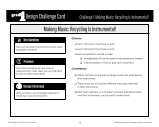
• Distribute a design challenge card to each team or read the design challenge, criteria, and constraints to the class.
• Display the river and truck that will be used during the Evaluate portion of the challenge. Ask one student to measure the width of the “river” and report it to the class. Ask a different student to measure the length and width of the “truck” and report those measurements to the class. Teams should record this information in their Engineering Design Notebooks for use as they plan.
• Create a “Know/Need to Know” T-chart and facilitate a class discussion.
Ask questions to ensure all students understand the challenge.
ASK
• Divide the class into teams of 3–4 students and assign each team a place to work.
• Distribute six index cards and six cups to each team.
• Instruct student teams to use the provided materials to build a freestanding bridge. The longest bridge built using the fewest materials will be the winner.
• Give teams 1 minute to plan and 3 minutes to build.
• Allow each
team to share about and measure their bridge.
• Introduce the problem by discussing the bridges the teams just built, what the students know ab
out bridges, the materials used to build bridges, and the ways we use bridges.
FACILITATION QUESTIONS:
• How were your bridges similar? How were your bridges different?
• Did some bridges work better than others? What construction choices were effective? What construction choices were not effective?
• What does a bridge need to do? Bridges need to span specific distances and support the load that will cross it, including pedestrians, trains, vehicles, or a combination of people and vehicles.
SENTENCE STEMS:
• The problem is . . .
• The challenge is . . .
• To meet the criteria, the design needs to . . .
• The constraints are . . .
• To solve this problem, I need to know or learn more about . . .
• Others have tried . . .
• I would solve the problem by . . .
grade grade
FACILITATION QUESTIONS:
• What can we do to make travel over the river quick and safe?
• What are the criteria? What are the constraints?
• What do you need to know in order to solve this problem?