Challenge 4: Help a Bird Out!104
1 1
grade grade
STEMulating Design Challenges in Science, Grades K–2
TEACHER GUIDE
|
ENGINEERING DESIGN PROCESS (EDP)
Challenge 4: Help a Bird Out!
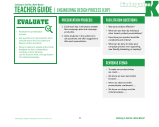
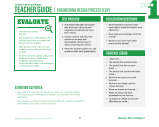
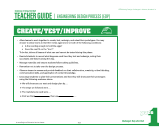
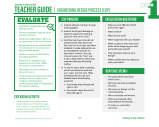
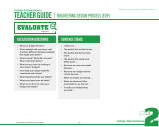
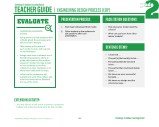
• Facilitate the presentation and testing process.
• Test each prototype using the same process each time.
• Accept and expect failure; failure is an opportunity to learn and improve.
• Ask questions to help students think critically about the successes and failures of their design.
• Monitor to ensure students follow the safety guidelines.
• Allow t
ime for students to ask questions of each other, reflect, and note their observations.
• Take photos of each prototype to share with teams.
• Observe teams to assess and provide feedback on their collaboration, creativity, critical thinking, communication skills, and application of content knowledge.
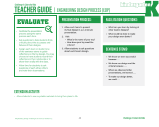
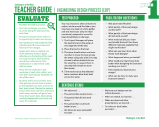
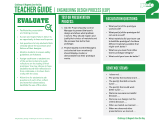
EVALUATE
TEST PROCESS:
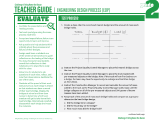
1. Instruct all team members to wear safety goggles.
2. Instruct the Project Manager to place the eggs in the nest and place the nest on the “tree.”
3. Hold the hair dryer or fan 25 cm away from the nest. Point it at the nest, turn it on high, and allow students to make observations as you simulate the wind for 30 seconds to 1 minute. You may choose to place the “tree” over a box or drop cloth to collect any materials that may fall during testing.
4. To test for water, hold a watering can 30 cm above the nest and pour water onto the nest. While
simulating the rain, ask your student teams the following questions. o Does water drain through the nest or not? o Does water cause the nest to fall or fall apart?
FACILITATION QUESTIONS:
• Was your nest effective? Did it protect the eggs?
• What worked?
• What did not work?
• What happened when you tested?
• What could your team have done better while designing your nest and working as a team?
• How would you improve your design?
• What could be done to make your nest even better?
SENTENCE STEMS:
• The part(s) that could work better is/are . . .
• We know we were successful because . . .
• We know our design met the criteria because . . .
• When we tested, we learned . . .
• When we observed other presentations, we learned . . .
• To make our nest better, we could . . .
EXTENSION ACTIVITY:
• Student teams can create a poster about what to do if they find a baby bird in nature or a poster telling how people can provide nesting materials that are safe for birds.
1 1
grade grade
STEMulating Design Challenges in Science, Grades K–2
TEACHER GUIDE
|
ENGINEERING DESIGN PROCESS (EDP)
Challenge 4: Help a Bird Out!
• Facilitate the presentation and testing process.
• Test each prototype using the same process each time.
• Accept and expect failure; failure is an opportunity to learn and improve.
• Ask questions to help students think critically about the successes and failures of their design.
• Monitor to ensure students follow the safety guidelines.
• Allow t
ime for students to ask questions of each other, reflect, and note their observations.
• Take photos of each prototype to share with teams.
• Observe teams to assess and provide feedback on their collaboration, creativity, critical thinking, communication skills, and application of content knowledge.
EVALUATE
TEST PROCESS:
1. Instruct all team members to wear safety goggles.
2. Instruct the Project Manager to place the eggs in the nest and place the nest on the “tree.”
3. Hold the hair dryer or fan 25 cm away from the nest. Point it at the nest, turn it on high, and allow students to make observations as you simulate the wind for 30 seconds to 1 minute. You may choose to place the “tree” over a box or drop cloth to collect any materials that may fall during testing.
4. To test for water, hold a watering can 30 cm above the nest and pour water onto the nest. While
simulating the rain, ask your student teams the following questions. o Does water drain through the nest or not? o Does water cause the nest to fall or fall apart?
FACILITATION QUESTIONS:
• Was your nest effective? Did it protect the eggs?
• What worked?
• What did not work?
• What happened when you tested?
• What could your team have done better while designing your nest and working as a team?
• How would you improve your design?
• What could be done to make your nest even better?
SENTENCE STEMS:
• The part(s) that could work better is/are . . .
• We know we were successful because . . .
• We know our design met the criteria because . . .
• When we tested, we learned . . .
• When we observed other presentations, we learned . . .
• To make our nest better, we could . . .
EXTENSION ACTIVITY:
• Student teams can create a poster about what to do if they find a baby bird in nature or a poster telling how people can provide nesting materials that are safe for birds.